

Pharmaceutical Cleanroom Requirements, Classifications, and Compliance
December 22, 2025

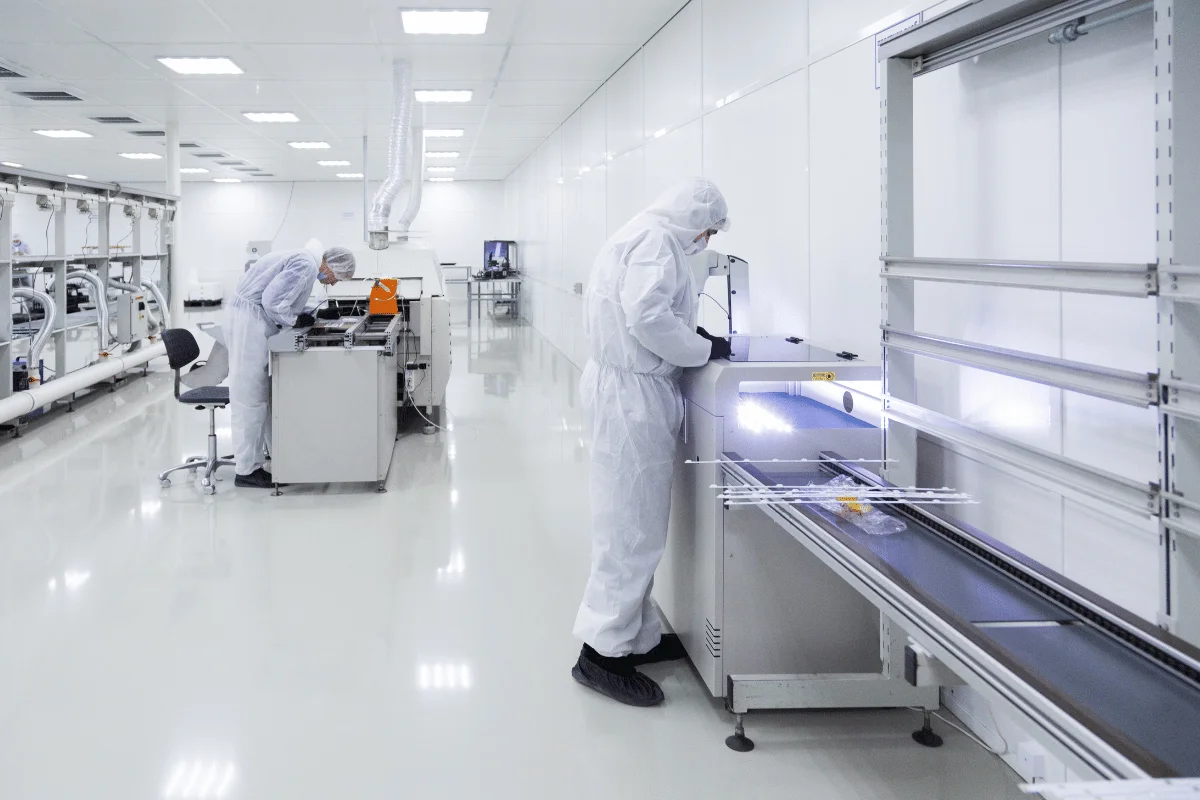
Pharmaceutical teams are always trying to balance contamination control, compliance, and productivity.
One small mistake in cleanroom design, such as poor airflow planning, wrong material choices, or the wrong classification, can bring everything to a stop.
The good news is that understanding various pharmaceutical cleanroom requirements helps protect product integrity, maintain compliance, and avoid expensive rebuilds.
In today's guide, we’ll explore cleanroom classifications, key components, design essentials, and how modular systems are reshaping pharmaceutical cleanroom construction.
What is a Pharmaceutical Cleanroom?
A pharmaceutical cleanroom is a highly controlled environment designed to maintain very low levels of airborne particles and microorganisms during drug manufacturing, sterile processing, and packaging.
A cleanroom serves as a safeguard, protecting pharmaceutical products from contamination that could compromise their safety and quality. When required, it also protects the sterility of products.
Here's why your pharmaceutical manufacturing process requires cleanrooms:
- Preventing Cross-Contamination: Your controlled environment must keep active pharmaceutical ingredients and excipients isolated from unwanted contaminants to ensure product safety and integrity. Whether producing sterile or non-sterile products, cleanrooms help limit particulate, microbial, and chemical pollutants in the environment.
- Achieving Appropriate Cleanliness Levels for Various Products: While not all pharmaceutical products need to be sterile, they all need to be produced under defined cleanliness levels, such as ISO classes or GMP-grade clean zones. Sterile products such as injectables and biologics must be produced in higher-grade cleanrooms. Non-sterile products also need cleanrooms, but the environmental standards vary by product type and regulatory requirements.
- Meeting Regulatory Mandates: Agencies such as the European Medicines Agency (EMA) and the Food and Drug Administration (FDA) require you to maintain cleanrooms that match Current Good Manufacturing Practices (cGMP) and other regulatory provisions.
Unlike the cleanrooms used in other industries, pharmaceutical cleanrooms must meet ISO 14644 particle control standards.
They must also comply with GMP guidelines that govern facility design, operational procedures, environmental monitoring, and the suitability of materials and equipment.
These standards and requirements are far stricter.
Pharmaceutical Cleanroom Classification
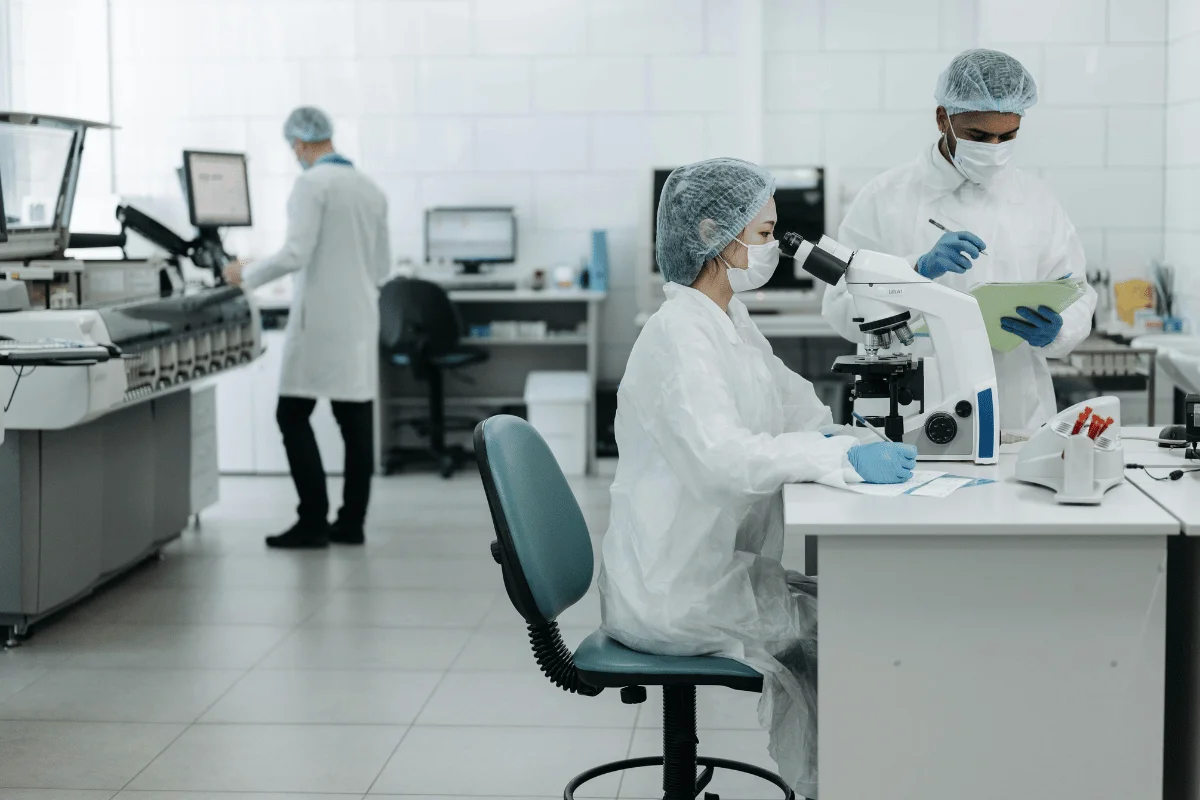
When it comes to pharmaceutical cleanrooms, not all controlled environments are created equal.
Each space is classified based on the level of cleanliness required for the air inside, and both ISO and GMP requirements play a role.
ISO 14644 standards define the technical criteria for cleanroom design and classification, including allowable particle concentration and test methods.
GMP guidelines set expectations for how cleanrooms must be designed, operated, and controlled in terms of hygiene, workflow, and contamination control.
In practice, ISO provides the measurable engineering specifications, while GMP provides the regulatory framework for how the cleanroom must function and be maintained.
Wondering what that looks like? Let's see.
ISO 14644 Cleanroom Classes
The International Organization for Standardization’s ISO 14644 standards define cleanroom classes by the number of airborne particles allowed per cubic meter.
Here’s a quick rundown of what this means:
- ISO Class 5 (Class 100): This is the gold standard for critical aseptic operations, and only 3,520 particles (≥0.5 microns) per cubic meter are allowed. If your pharmaceutical cleanroom involves sterile filling and open product exposure zones, you'll fall under this class. For example, if you manufacture medical devices, they require high levels of cleanliness and low particulate contamination.
- ISO Class 6 (Class 1,000): The cleanrooms in this class are less commonly used in pharmaceutical facilities, as most operations rely on ISO 7 or ISO 8 for background environments. ISO 6 may be needed for certain products or specialized processes that demand tighter particulate control than ISO 7 can provide. When ISO 6 is used as a room environment, ISO 5 conditions are typically achieved within isolators rather than relying on the ISO 6 room as a direct background for ISO 5 activities. For example, you can use this class if you’re making or assembling medical device components that require a controlled environment but don't require full sterile conditions.
- ISO Class 7 (Class 10,000): This class is commonly used for various pharmaceutical and biotechnology manufacturing processes, as well as some non-sterile compounding. These applications require stringent air filtration and airflow control to operate at contamination levels ideal for sensitive manufacturing activities. For instance, they are commonly applied in ointment, cream, or oral liquid manufacturing areas.
- ISO Class 8 (Class 100,000): This one covers general pharmaceutical or device manufacturing, pharmaceutical packaging, component storage, and less critical processes where basic contamination control is enough. For example, they can be used for many oral solid dosage operations such as blending, compression, or general packaging.
These classifications help you operate within specified contamination control limits to maintain compliance for different stages in the manufacturing process.
Note: The classes in the brackets correspond to the FED STD 209E equivalents. FED STD 209E is the US cleanroom classification standard officially discontinued in 2001 in favor of the ISO Standard 14644 series, but is still used in industry.
Let's capture these classifications at a glance.
ISO Cleanroom Classification for Pharmaceutical Applications:
GMP Grade Classifications
Now, let’s talk about GMP. These are the Good Manufacturing Practice guidelines that classify cleanrooms into Grades A through D.
If this sounds overwhelming, don't worry. We'll walk you through it.
- Grade A: This is the cleanest of the clean. Used for high-risk activities like aseptic filling, where sterile products are exposed, the grade is equivalent to ISO Class 5 or FED STD 209E Class 100 at rest/operational.
- Grade B: This grade is the immediate background for Grade A zones and is often used for aseptic prep or filling room backgrounds. Grade B is equivalent to ISO Class 5 at rest or Class 7 operational, and FED STD 209E Class 100 at rest or Class 10,000 operational.
- Grade C: This one is used for less critical sterile production, such as formulation before sterilization. It's typically ISO 7 at rest or ISO 8 in operation, and FED STD 209E Class 10,000 at rest or Class 100,000 operational.
- Grade D: This grade covers general cleanroom manufacturing areas and component preparation with moderate cleanliness needs. Grade is equivalent to ISO Class 8 at rest and FED STD 209E Class 100,000 at rest, with no applicable equivalents for operational state.
GMP classifications are crucial because they help ensure product safety, particularly in the manufacture of sterile biopharmaceutical products, vaccines, and medications.
Note: There are other classes, specifically ISO Classes 1-4 and Class 9, which apply to other clean environments and industries, such as the aerospace and semiconductor industries.
Class 9 exists under ISO 14644-1. As the least clean classification in the system, it allows roughly the same amount of particles as ordinary air. It applies to background areas that don't require active contamination control, such as corridors.
So, how do you choose the correct class and grade for your pharmaceutical cleanroom?
Here’s how:
It all depends on how exposed your product is during the manufacturing process.
Injectable biologics or vaccines, for example, need the tight control of ISO 5 and GMP Grade A environments, while oral solid dosage forms can operate safely in less stringent conditions.
Let’s check out the combined classification:
Pharmaceutical Cleanroom ISO & GMP Classification:
Partnering with cleanroom experts during your pharmaceutical cleanroom design phase ensures you hit the right balance, such that you don’t over-engineer (and overspend), but still meet every compliance requirement from the onset.
Key Components of Pharmaceutical Cleanrooms
The classification and grading process for a pharmaceutical cleanroom considers much more than just four walls and an air filter.
The finely tuned system of a cleanroom comprises every surface, fixture, vent, and other key elements that help keep contaminants out and compliance in.
Let's break down the major components that keep your pharmaceutical manufacturing cleanroom running like clockwork.
1. Wall and Ceiling Panels
Think of your cleanroom panels as the first line of defense. Each panel must be tough, clean, and completely particle-free.
Here's what that means in practice:
- Non-Shedding Surfaces: Use high-end modular panels, such as uPVC-coated panels, to create smooth, non-porous finishes that don't trap or release particles into the air.
- Seamless Joint Systems: Opt for flush-mounted joints to eliminate small crevices where dust and microbes tend to accumulate.
- Chemical Resistance: You'll need surfaces that are tough enough to withstand aggressive disinfectants, such as hydrogen peroxide and isopropyl alcohol, without degrading over time.
- Ceiling Panels: Opt for walkable ceilings in areas that need regular maintenance access above the ceiling plenum. Non-walkable ceilings can be used in zones where structural access is not needed. These choices can minimize particle generation.
2. HVAC and Air Filtration Systems
Your cleanroom might require the following:
- HEPA/ULPA Filtration: You can have HEPA filters that remove 99.97% of particles ≥0.3 microns, or ULPA filters that take it a step further for ultra-clean ISO Class 5 environments.
- Airflow System: Maintains a constant, controlled flow of filtered air via supply/exhaust ducts, diffusers, and grilles to minimize contamination.
- Temperature & Humidity Control: Heating/cooling, humidifiers/dehumidifiers, and sensors keep the cleanroom within strict environmental ranges.
- Pressure Control: Positive or negative pressure ensures contaminants cannot enter or exit the cleanroom, maintaining a controlled environment.
3. Lighting and Utilities
Here's what your cleanroom will need:
- Flush-Mounted Fixtures: You can use LED lights that sit flush with ceilings to avoid particle accumulation.
- Process Utilities: Your system should feature panels or walls that integrate purified water, electrical conduits, compressed air, and other elements through sealed penetrations to ensure a clean, efficient, and elegant design.
4. Flooring Systems
Ensure the following for your cleanroom’s flooring:
- Coving Edges: Use curved floor-to-wall transitions to prevent dirt buildup and make cleaning easier and quicker.
- Seamless Epoxy or PVC: It's best to use monolithic floors because they lack the grout lines that trap contaminants, and they are also easy to clean.
5. Cleanroom Doors and Vision Panels
Your cleanroom will need the following controlled access points to maintain environmental integrity:
- Single Doors: These are used for personnel or material entry in lower-classification areas where traffic is minimal, and pressure differentials are moderate.
- Double Doors: You need to install double doors at critical transition zones between different cleanroom classifications, creating airlocks that prevent cross-contamination during entry and exit.
- Vision Panels: Cleanrooms need clear, flush-mounted windows in doors and walls to allow you to visually monitor cleanroom operations without requiring entry or compromising the sealed environment.
Pharmaceutical Cleanroom Design Requirements
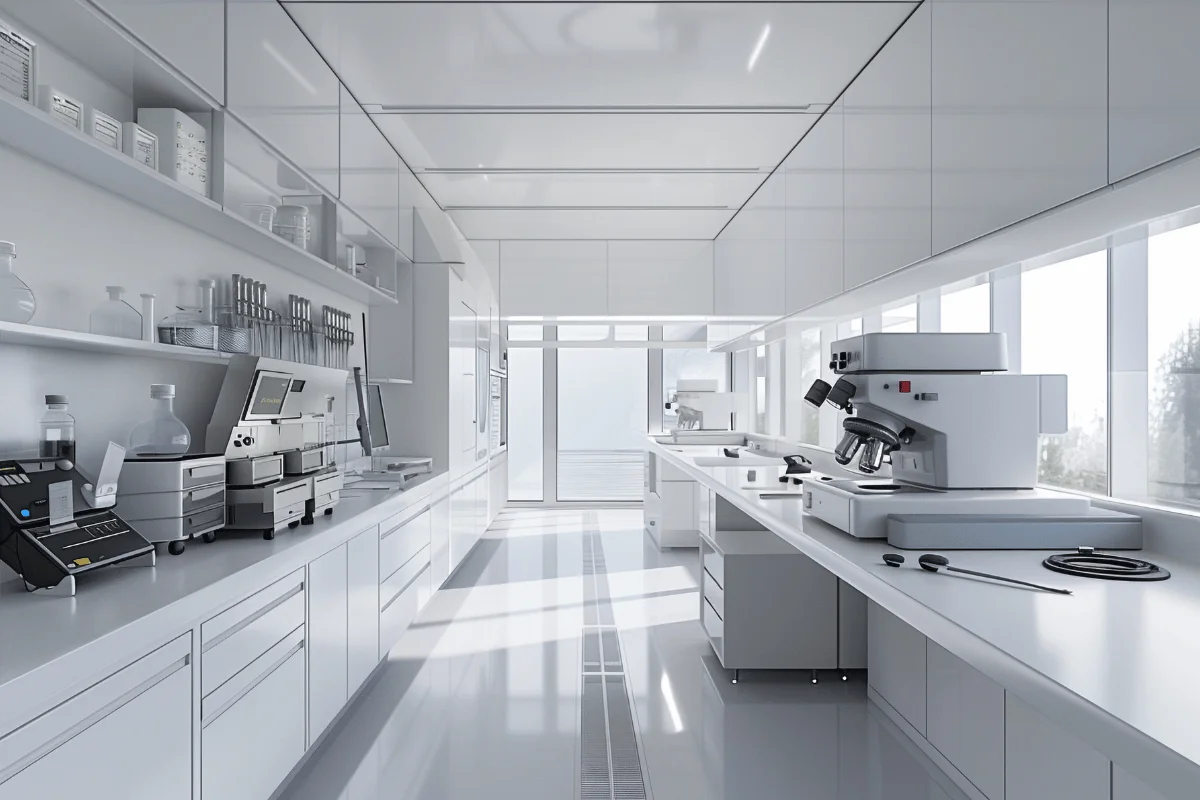
Now you know the main components to include in your cleanroom design based on the classification level required for your pharmaceutical subsector.
A compliant pharmaceutical cleanroom design is all about finding that sweet spot between strict regulations, smart workflow planning, and airtight contamination control.
Every detail, from the way people move to how materials enter and exit, can make or break compliance.
You'll need to follow these measures:
Design Principles for Compliance
Your cleanroom design should take care of the following aspects:
- Personnel Flow Control: The design should include separate entry and exit paths to minimize contamination risks. Gowning rooms and air showers are also necessary for keeping particles from hitching a ride into your clean zones.
- Material Flow Management: You'll want to plan dedicated routes for raw materials and finished products. You can have pass-through chambers to maintain proper separation between rooms.
- Zoning by Classification: Arrange spaces in a clean-to-dirty sequence, with ISO Class 8 areas leading to Class 7, and finally to your critical ISO Class 5 zones.
- Minimizing Surface Area: Ensure you design your areas with cleanliness in mind. For example, using flush-mounted utilities reduces ledges and protrusions. This minimizes the surface area where dust and other particles can accumulate, making cleaning easier.
Modular Pharmaceutical Cleanrooms
Meeting these cleanroom requirements can be tricky, especially when dealing with traditional builds.
Traditional stick-built cleanrooms have served the various cleanroom industries for decades, but they often come with long construction times, inconsistent finishes, and costly downtime.
Modular pharmaceutical cleanroom builds have changed the game, offering precision, speed, and flexibility that conventional construction can’t match.
Let's see why you should opt for a modular build.
Advantages of Modular Construction
Modular cleanroom construction methods offer benefits such as:
- Faster Installation: Most modular construction companies build prefabricated panels off-site and deliver them ready for assembly. The timeline reduces by 30-40%, helping you bring products to market faster.
- Consistent Quality Control: Every panel is factory-tested to meet specifications, ensuring you avoid the quality variations that often occur with on-site builds.
- Minimal Operational Disruption: Modular installations produce less noise and dust, which makes them ideal if you need to expand an active facility.
- Weather-Resilient Installation: The majority of the panel structure is manufactured off-site in a controlled environment, where weather conditions do not interfere with fabrication quality or timelines. On-site work is limited primarily to assembly, which reduces the exposure to harsh weather compared to traditional construction methods. Rain, humidity, or temperature extremes have minimal impact on the structural integrity, efficiency of the installation, or the overall project schedule.
These advantages make modular construction the preferred choice for pharmaceutical cleanroom manufacturers who value speed, flexibility, and long-term reliability.
That’s precisely why we designed our modular systems based on over ten years of expertise and experience.
Every Moddulx panel is purpose-built for pharmaceutical environments, featuring non-shedding uPVC surfaces and seamless joints that meet or exceed GMP and ISO requirements. No guesswork, no compliance surprises.
When you work with Moddulx, you can experience transformation through features such as:
- Built-In Compliance: Moddulx modular systems are purpose-designed for the pharmaceutical industry, with non-shedding uPVC surfaces, seamless joints, and chemical-resistant coatings. We pre-qualify each component to meet GMP and ISO requirements.
- Reconfiguration Capability: With Moddulx, you get reusable panels that give flexibility for future expansion as your production needs evolve. There’s no need for long shutdowns.
- Lower Lifetime Costs: Our excellent insulation measures, which include aluminum honeycomb, Rockwool, PUF, and EPS cores, help reduce HVAC energy consumption. Our modular panels have durable, low-maintenance surfaces that cut down cleaning time and costs.
- Material Innovation: Moddulx cleanrooms use advanced aluminum honeycomb cores for strength without adding weight. The uPVC coatings resist chemical wear from frequent disinfection, and the flush-mounted integration keeps utilities hidden while maintaining a seamless, compliant surface.
- Faster Installation: We deliver prefabricated modular systems that facilitate easy, seamless, and rapid on-site setup.
Want to build a fully compliant pharmaceutical cleanroom?
Book a consultation for your custom pharmaceutical cleanroom project today.
Common Pitfalls and How to Avoid Them
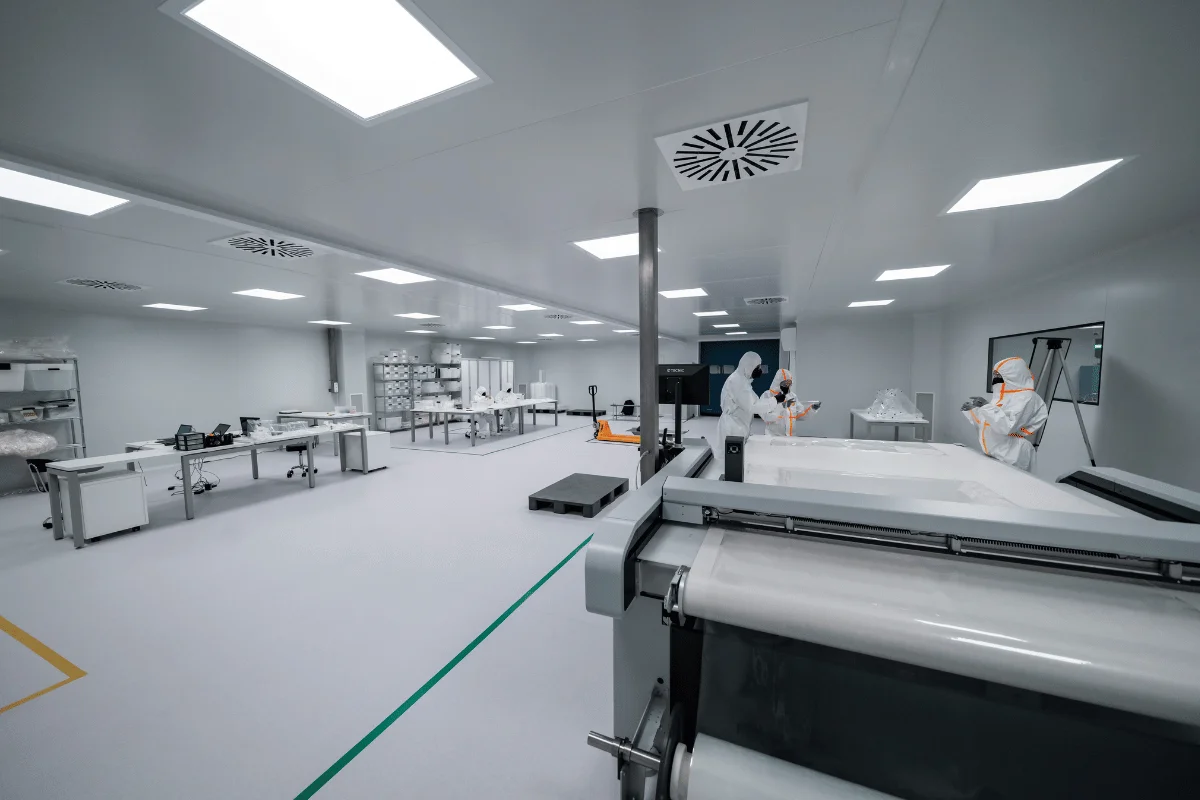
Even the best cleanroom projects can run into problems if you don't design well or choose the right materials from the start.
Here are some common mistakes that can derail your build and how you can steer clear of them:
- Inadequate Pressure Differential Planning: A poorly designed HVAC system can allow contaminated air into cleaner zones. You'll want to establish proper pressure cascades from ISO Class 8 to Class 5 areas and include sensors for continuous monitoring.
- Poor Material Selection: Standard construction materials shed particles and degrade under chemical cleaning. Instead, it's best to use pharmaceutical-grade wall panels with uPVC coatings and seamless joints to ensure durability, chemical resistance, and GMP compliance.
- Insufficient Documentation: Missing certifications or incomplete material records can delay inspections and validation. You must maintain detailed specifications, certificates, and as-built records for all cleanroom materials and systems.
- Inefficient Workflow Design: Cross-contamination can occur when personnel and materials share the same routes. Ensure you separate entry, exit, and material paths, and use pass-throughs to preserve sterile conditions.
- Ignoring Maintenance Access: Limited access hinders routine cleaning and filter replacement. Your design must incorporate walkable ceiling panels, modular utility penetrations, and easy-access service points to streamline maintenance while maintaining environmental control.
- Overlooking Future Flexibility: Fixed pharmaceutical cleanroom layouts limit expansion or reconfiguration. Your build must incorporate modular panels and adaptable infrastructure to accommodate layout adjustments as your production needs evolve.
Frequently Asked Questions (FAQs)
Have questions about ensuring you build a compliant cleanroom in the pharmaceutical industry? We've got answers to common queries such as:
What is the Minimum Space Required for a Pharmaceutical Cleanroom?
Neither the FDA nor ISO 14644 mandates a universal minimum space for pharmaceutical cleanrooms.
The required space depends on the specific equipment, personnel, and processes for the intended operations.
What Are the Documentation Requirements During Cleanroom Construction?
When constructing a cleanroom, the required documentation includes:
- User Requirement Specification, which shows the room's purpose, applicable environmental parameters, acceptance criteria, and required ISO classification.
- “Clean build” protocols that outline the necessary contamination control and cleaning procedures during construction.
- Installation Qualification, which verifies that all components, utilities, and equipment have been installed in accordance with the approved design and manufacturer's specifications.
- Factory Acceptance Testing or Site Acceptance Testing reports, which show the tests done on major parts, such as panels, before or upon delivery to ensure they meet specifications.
- Testing and validation documents, such as the Validation Master Plan, Performance Qualification, Standard Operating Procedures, and Operational Qualification.
How Early Should Regulatory Consultants Be Involved in Cleanroom Projects?
You should involve regulatory consultants in your cleanroom project right from the concept and planning stages.
Consultants can help you avoid unnecessary costs, mitigate risks, streamline validation, and manage complex, shifting standards.
Can Cleanrooms Be Designed for Multiple Drug Types From Day One?
You can design your cleanroom for multiple drug types from day one.
For this to happen, ensure your initial design includes a clear contamination control strategy, built-in flexibility, and extensive planning.
Can Cleanrooms Be Relocated After Installation?
Yes, but only if it’s a modular cleanroom.
The prefabricated modular panels are easy to disassemble, reassemble, or reconfigure when moving the cleanroom to a new area.
Conclusion
Designing and maintaining a compliant pharmaceutical cleanroom requires balancing ISO and GMP standards with operational efficiency.
That’s where Moddulx makes the difference.
Our modular cleanroom systems are engineered specifically for pharmaceutical applications, featuring non-shedding panels, seamless construction, and quick installation that keeps your project on schedule.
Whether you’re building a new sterile suite or upgrading an existing space, our team helps you stay compliant and future-ready.
Consult with us today to build a compliant, audit-ready pharmaceutical cleanroom.
More blog
Discover our more articles
.png)
.png)