
Protecting Semiconductor Yield: Combating ESD and Particle Contamination with Modular Cleanroom Panels
February 18, 2026

.png)
Protecting Semiconductor Yield: Combating ESD and Particle Contamination with Modular Cleanroom Panels
Microchips power everything from your smartphone to the car you drive. But creating these tiny technological marvels requires an environment so clean that a single speck of dust can ruin an entire production batch. In the high-stakes world of semiconductor and electronics manufacturing, there is no margin for error. This is where the structural integrity of the cleanroom itself becomes the first and most overlooked line of defence.
Modular cleanroom panels are prefabricated wall and ceiling systems designed to control particles, ESD, and environmental stability in high-precision manufacturing environments such as semiconductor fabrication.
While air filtration systems often get the glory, the walls surrounding the process are equally vital. Modular cleanroom panel systems have emerged as the superior choice for these high-precision facilities. They offer specific advantages in contamination control, static protection, and flexibility that traditional drywall simply cannot match. This post explores exactly why modular wall systems are the backbone of modern electronics manufacturing.
Precision Environments: Why Structural Integrity is the First Line of Defense
Semiconductor manufacturing involves manipulating matter at the atomic scale. As transistors shrink to mere nanometers, their sensitivity to environmental pollutants skyrockets. A controlled environment isn't just a regulatory requirement; it is a financial necessity.
Yield Rate — The Primary Metric of Success
Yield rate—the percentage of non-defective items produced—is the primary metric of success in this industry. Airborne particles, chemical vapours, or fluctuating humidity can cause defects on a silicon wafer, rendering chips useless. Traditional construction materials like gypsum board shed particles when cut or disturbed and are difficult to clean thoroughly.
In contrast, modular cleanroom panel systems create a sealed, repeatable envelope. They support the rigorous classification standards required by facilities, such as ISO Class 5 or cleaner. By eliminating variables in the building structure, manufacturers protect their yield and their bottom line.
Material Matters: Advanced ESD Protection and Particle Control in Electronics
In electronics manufacturing, two invisible enemies constantly threaten production: electrostatic discharge (ESD) and microscopic particles. The choice of panel material directly influences your ability to combat both.
The Threat of Electrostatic Discharge (ESD)
Static electricity is a silent killer for sensitive electronic components. A discharge you can’t even feel (often below human perception thresholds) can melt silicon circuitry or degrade a chip's long-term reliability.
Standard construction materials are often insulative, meaning they hold onto static charges. When a technician or a cart brushes against a standard wall, that charge can build up and arc over to sensitive equipment. Modular panels designed for electronics often feature static-dissipative surfaces. These specialized coatings or materials allow static charges to flow harmlessly to the ground rather than building up on the surface of the wall. This passive protection is critical for maintaining an ESD-safe zone.
Keeping Particles at Bay
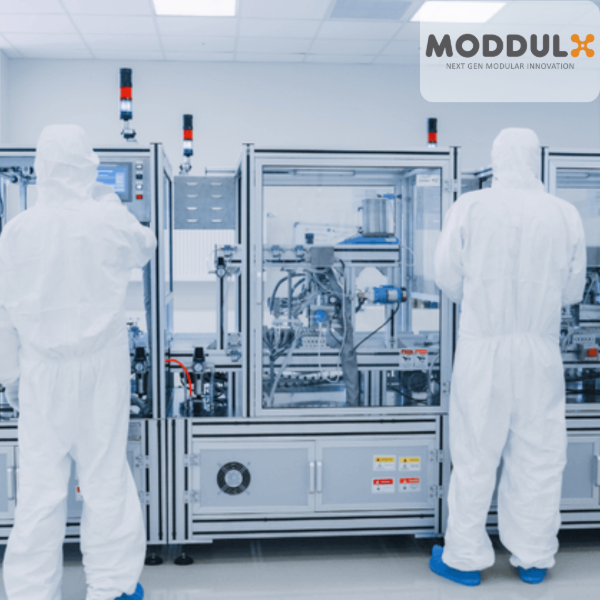
Particle generation is the other half of the equation. Porous surfaces trap dust, and materials that degrade over time release particles into the air stream. Modular panels utilize non-shedding materials like aluminum, UPVC, or powder-coated steel.
Furthermore, the design of the connection is vital. Modular systems use flush connections between panels, eliminating the ledges and crevices where dust accumulates in traditional construction. This seamless integration ensures that cleaning protocols are effective and that the walls themselves do not become a source of contamination.
Learn more about how modular cleanroom panel systems create a seamless, contaminated environment.
Stability Engineering: Mastering Thermal, Moisture, and Vibration Control
Beyond dust and static, the physical atmosphere of the cleanroom must remain perfectly stable. Fluctuations in temperature or humidity can cause wafers to expand or contract, leading to misalignment during photolithography.
While modular panels provide the physical barrier, their airtight precision is what allows monitoring instruments to function accurately. Magnehelic gauges are often integrated into modular wall systems to provide real-time monitoring of the differential pressure between clean zones. Because modular panels create a superior airtight seal compared to traditional drywall, these gauges can maintain a stable 'pressure cascade,' ensuring that air always flows from the cleanest areas toward less-controlled zones to prevent cross-contamination.
Thermal and Moisture Stability
Modular panels typically feature an insulating core, such as honeycomb aluminum or rock wool, sandwiched between the outer skins. This provides excellent thermal insulation, helping the HVAC system maintain precise temperature setpoints with greater energy efficiency.
Moisture control is equally critical. High humidity can cause corrosion on metal parts, while low humidity increases the risk of static buildup. Modular panels are non-hygroscopic; they do not absorb moisture. This prevents the "sponge effect" seen in traditional materials, ensuring that the room's humidity levels remain constant and controllable.
Vibration Dampening
As feature sizes on chips decrease, equipment becomes increasingly sensitive to vibration. Foot traffic, heavy machinery, or even external road traffic can transmit vibrations through the floor and walls, ruining the imaging process on a wafer.
High-quality modular panels provide structural rigidity. Their composite construction helps dampen ambient vibrations rather than amplifying them. This creates a stable platform for the ultra-sensitive metrology and lithography tools used in advanced manufacturing.
For a deeper dive into how flexible yet sturdy these designs can be, explore how modern modular construction balances flexibility with structural performance.
Modular vs. Stick-Built: Why Modular Wins for Cleanroom Construction Speed
When planning a new fab or expanding an existing one, facility managers often weigh modular systems against traditional "stick-built" (drywall and stud) construction. For the electronics industry, modular wins on almost every front.
- Speed of Installation: In the fast-moving tech world, time to market is everything. Modular panels are prefabricated off-site. Installation is a matter of assembly, not construction. This can reduce project timelines by 30-50%.
- Clean Build Protocol: Cutting drywall generates massive amounts of dust. Installing modular panels is a clean process, allowing it to be done adjacent to active cleanrooms without disrupting ongoing operations.
- Flexibility: Technology changes rapidly. A modular wall system can be disassembled, moved, and reconfigured as equipment or process flows change. Traditional walls must be demolished and rebuilt.
- Consistency: Factory-manufactured panels undergo rigorous quality control before they reach the site. Traditional construction relies heavily on the varying skill levels of on-site tradespeople.
When evaluating modular vs traditional cleanroom cost and construction, the primary advantage of modular systems is their ability to be installed in a fraction of the time with zero construction debris.
Conclusion
The semiconductor and electronics industries demand perfection. Every variable that can be controlled must be controlled. Modular panels provide the necessary structural performance to handle ESD, particulates, and environmental stability. By choosing modular over traditional construction, manufacturers gain not just a room but a precision tool that protects their yield and adapts to their future needs. Investing in the right envelope today ensures the reliability of the technologies of tomorrow.
Frequently Asked Questions (FAQ)
What is the best panel material for semiconductor cleanrooms?
Aluminum honeycomb panels are often preferred for semiconductor cleanrooms. They are non-combustible, lightweight, offer excellent structural rigidity, and are non-shedding. When coated with anti-static paint, they provide superior ESD protection.
How do modular panels help with ISO classification?
Modular panels help achieve ISO classifications (like ISO 5 or 6) by providing flush, non-porous surfaces that are easy to clean and do not shed particles. Their airtight assembly also aids the HVAC system in maintaining positive pressure, which keeps contaminants out.
Can modular cleanrooms be expanded later?
Yes, this is a primary benefit. Unlike traditional drywall construction, modular panels can be unbolted and reconfigured. You can expand the cleanroom footprint or change the internal layout with minimal disruption to daily operations and very little construction debris.
Do modular panels provide fire protection?
Yes. Most high-quality modular panels are designed with fire-resistant cores (such as rock wool or aluminum honeycomb) and meet strict fire safety codes required for industrial facilities handling chemicals and electronics. Always check the specific fire rating of the panel system you choose.
More blog
Discover our more articles
.png)